
PRISTINE USER MANUAL
Posted by Pristine Technologies on 2026 May 22nd
Safety
The Core Commands of Firearm Safety
There is no excuse for a mishap. Before handling this action or any firearm built upon it, you must commit to and practice these four non-negotiable rules:
- ALWAYS assume your firearm is loaded. Treat every single rifle you touch with the exact same respect, care, and caution as you would a fully loaded, chambered, and cocked firearm. Never take anyone's word that a gun is empty. Check it yourself every single time.
- ALWAYS keep your firearm pointed in a safe direction. Never allow the muzzle of your rifle to point at anything you do not explicitly intend to shoot or destroy. A safe direction means that even if an accidental discharge occurs, no injury or property damage will happen.
- ALWAYS keep your finger off the trigger. Do not move your finger inside the trigger guard until your sights are aligned perfectly on your target and you have made the conscious decision to shoot.
- ALWAYS know your target and what is beyond it. High-velocity rifle projectiles can travel for miles and penetrate dense materials. You must explicitly identify your target and know exactly what stands behind and around it before you ever press the trigger.
- Ensure Rifle is unloaded before ANY work is completed.
PARTS OF YOUR PRISTINE SYSTEM
1. The Receiver Body
The core foundation of the system, machined to a standard Remington 700 footprint.
- The Tang: The rear angled portion of the receiver body. Features our updated, reshaped geometry to ensure a clean drop-in fit with industry-standard stocks and chassis.
- Recoil lug: Transfers recoil from your barreled action to the rifle stock or chassis.
- Picatinny Rail: Pristine picatinny rail for optics mounting. Fastened with four #8 - 40 screws and two ⅛ dowels to keep your rail firmly fastened.
- Bolt Release Assembly: Bolt release, spring and pin for retaining your bolt in the receiver.
- Trigger Pins: Two dowel pins for installing your remington 700 trigger of choice.
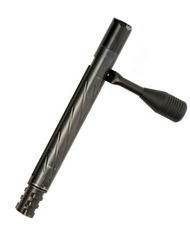
2. The Bolt Assembly
The moving mechanism responsible for feeding, chambering, locking, and extracting the cartridge.
- The Bolt Body: The main cylindrical steel tube that slides and rotates inside the receiver. Features fluting to clear debris and reduce friction.
- Bolt Handle: The handle/knob used to operate the bolt. Fastened with the bolt handle set screw.
- Firing Pin Assembly: The internal firing group that contains the firing pin, spring, cocking piece, and retaining collar.
- Bolt Shroud: The protective rear cap of the bolt assembly that encloses the firing pin mechanism.
3. The Bolt Head
- Bolt Head: Engineered to lock securely into the receiver body and withstand maximum chamber pressure upon ignition.
- Extractor: Sako style extractor with its spring and pin. Used to extract casings from the chamber.
- Ejectors: Dual ejectors to clear spent casings upon ejection.
- Bolt Head Retaining Pin: The pin that connects the bolt head to the bolt body.
BOLT ASSEMBLY/ DISSASEMBLY
This guide outlines the steps required to strip the bolt assembly down to the bolt head, allowing you to swap calibers or service internal components.
Required Tools
- Pristine Bolt Block (or protected vise) to hold bolt
- 1/16" Allen Key
- Small screwdriver, pin, or plain-point punch
- 13mm (or 1/2") Wrench
- Small pliers
Disassembly Procedure
- Remove the Bolt Shroud: Secure the bolt head in the Bolt Block. Rotate the shroud clockwise until the firing pin drops into the fired position. Pry the shroud back slightly to clear the firing pin, then pull it up and off.
- Remove the Bolt Handle: Use the 1/16" Allen key to remove the bolt handle set screw. Use the wrench to rotate the firing pin clockwise 90 degrees (two clicks). Use a punch to depress the internal retaining collar while pushing the bolt handle out of its slot.
- Remove Firing Pin & Bolt Body: Slide the firing pin assembly straight out of the rear of the bolt body. Compress the body down against the bolt head, and remove the retaining pin. Separate the bolt body from the bolt head.
*For a step-by-step visual demonstration of this process, visit our Pristine Actions YouTube channel. https://www.youtube.com/@PristineActions
Assembly Procedure
- Seat the Bolt Head: Place the bolt head into the Bolt Block with the extractor claw facing you. Slide the wave washer onto the neck of the bolt head.
- Attach the Bolt Body: Slide the bolt body onto the bolt head with the bolt handle slot facing you. Align the holes and insert the retaining pin vertically.
- Install the Firing Pin: Rotate the firing pin cocking piece until it drops into the roller slot, then slide the entire firing pin assembly into the rear of the bolt body.
- Install the Bolt Handle: Depress the internal retaining collar with a punch and slide the bolt handle back into its slot.
- Reset & Finish: Use the wrench to rotate the cocking piece clockwise until it clicks back into position. Push the bolt shroud onto the rear of the cocking mechanism until it clicks into place. Reinstall and firmly tighten the bolt handle set screw.
BOLT HEAD SWAP
BOLT HEAD SWAP (CALIBER CHANGEOVER)
The Pristine action features a multi-caliber design, allowing you to swap bolt heads to accommodate different rim sizes without replacing the entire bolt assembly.
- Strip the Bolt: Follow the disassembly steps to remove the bolt shroud, bolt handle, and internal firing pin assembly from the bolt body.
- Remove the Current Bolt Head: Compress the body down slightly against the bolt head, and slide the retaining pin clear. Pull the old bolt head out.
- Prep the New Bolt Head: Take your alternate caliber bolt head, ensure the extractor claw faces forward during installation so that the extractor claw will run on the ejector port side of your action when assembled.
- Reassemble the System: Slide the bolt body back onto the new bolt head, aligning the handle slot with the extractor claw. Reinsert the retaining pin vertically, slide the firing pin assembly back into place, reinstall the bolt handle, and click the shroud back on.
⚠️ CRUCIAL WARNING: After swapping a bolt head to switch calibers, always verify headspacing with proper go/no-go gauges on your new barrel setup before firing the rifle. Ensure the caliber stamped on your barrel matches the ammunition and the new bolt head rim size exactly.
MAINTENANCE
General Advice
When it comes to modern precision actions, less is more. Excess oil acts as a magnet for dust, carbon, and environmental grit, which quickly turns into sandpaper on high-tolerance, CNC-machined surfaces.
Keep the action clean, dry, and minimally lubricated to ensure flawless cycling.
Recommended Lubrication Points
- Locking Lugs: Apply a very small amount of high-pressure firearms grease explicitly to the rear bearing surfaces of the bolt lugs. This protects the locking interfaces under extreme pressure.
- Cocking Cam: Place a small dab of grease directly on the rear cocking ramp where the bolt roller rides. Keeping this ramp lubricated is essential to maintaining a smooth, light bolt lift.
- Bolt Body: Do not leave visible, wet oil on the exterior of the bolt. Instead, simply wipe the fluted bolt body down with a dry silicone cloth or apply a very thin, invisible film of high-quality oil to prevent corrosion without attracting dirt.
Routine Cleaning Protocol
- Clear and Remove: Ensure the rifle is completely unloaded. Remove the bolt assembly from the receiver body.
- Wipe the Bore & Receiver: Clean the inside of the receiver body using a nylon brush or a clean patch to remove carbon buildup, focusing closely on the internal lug tracks.
- Inspect Internal Channels: Keep the internal firing pin channel and the bolt head face free of packed grease, carbon debris, or unburnt powder brass shavings to ensure consistent ignition and extraction.
TORQUE SPECS
Using a calibrated torque wrench is essential to maintaining the structural integrity and precision of the Pristine platform. Over-torquing can strip threads or distort components, while under-torquing will cause assemblies to shift under heavy recoil.
Picatinny Rail Screws (#8 - 40) 28 in-lbs (inch pounds)
Barrel Installation
Always apply a thin film of high-quality anti-seize grease to the barrel tenon threads and shoulder surfaces prior to installation to prevent metal galling.
- Shouldered Prefit Barrels Torque Spec: 90 ft-lbs (foot-pounds)
- Prefit Barrel Nuts (Remage Style Systems) Torque Spec: 75 ft-lb (foot-pounds)
TROUBLESHOOTING
If you encounter performance issues with your build, use this guide to isolate and resolve the most common mechanical anomalies before contacting technical support.
1. Failure to Fire / Light Primer Strikes
Excessive grease / debris build up in the bolt. Disassemble the bolt and ensure the entire assembly is cleaned and lightly lubricated.
Incorrect Headspace. Verify headspace with a calibrated set of headspace gauges.
2. Heavy Bolt Lift (Hard to Open After Firing)
Dry cocking cam. The cocking ramp can require some lubrication for optimal operation. Apply a small amount of grease to the bolt body cocking roller track.
Over-pressure ammunition. Inspect spent casings for cratered primers, ejector marks, or flattened rims. Any abnormalities noticeable on the brass should be considered to be problematic and need further attention.
3. Weak Extraction or Ejection
Debris build up under the extractor claw. Brass shavings or carbon packed under the extractor claw can limit movement. Clean out that slot with a small pick.
Stuck or Bound ejectors. Dual ejector pins should depress completely under thumb pressure and spring back immediately. Clean out the ejector channels with an aerosol blast cleaner.
Technical Support: If an issue persists after performing these basic field checks, stop use immediately. Contact us directly through our official website channels for expert gunsmithing support.